
Oh, how I love approaching the summer months. People seem open to new adventures, carefree and less stressed.
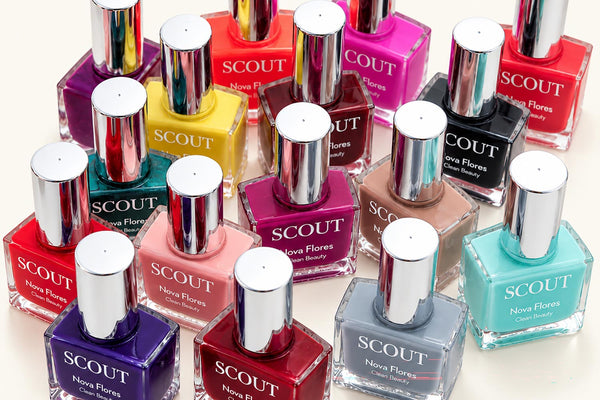
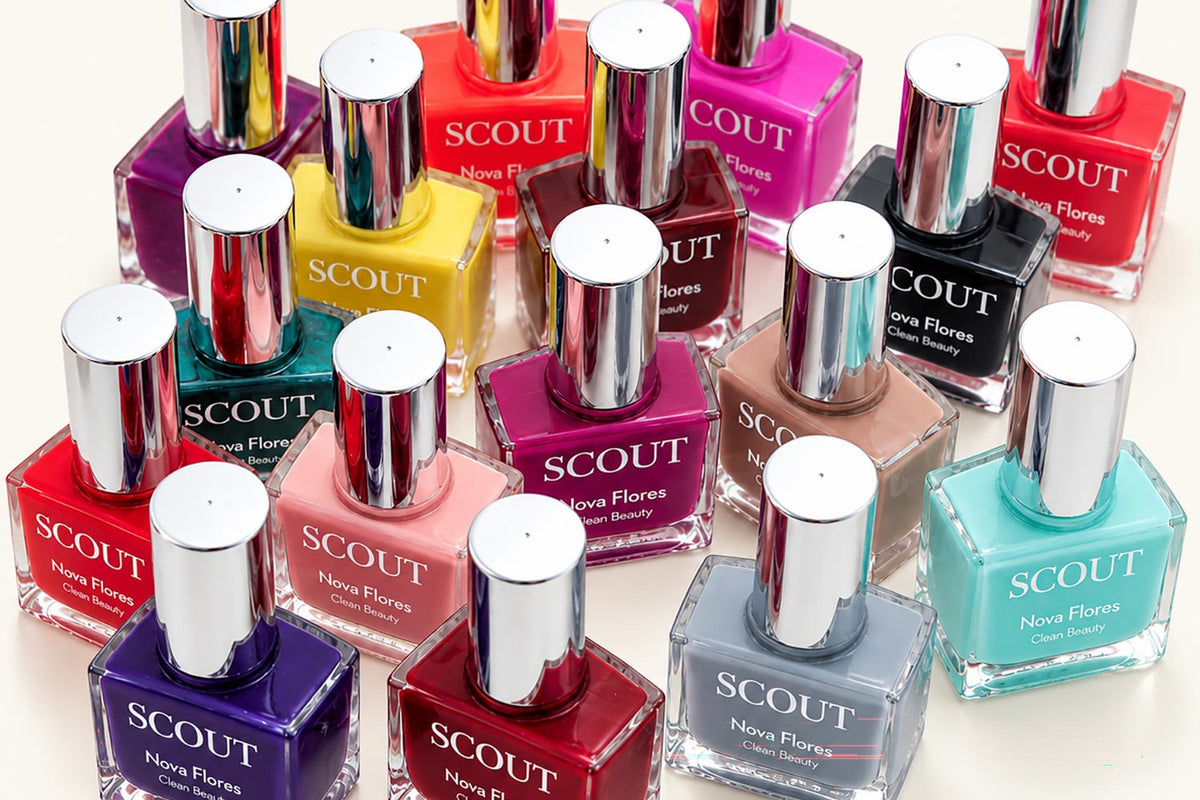
We spent time in Byron Bay recently and I could not help noticing how many women and girls had painted toes and fingernails. It might be that I am simply more attuned to it — we had not long launched our own polish — but it was terrific to see the vibrant, almost fluorescent shades the young girls were wearing, and I enjoyed experimenting with some of the more daring shades in our own range.
Which brings me to the question I get asked more than any other about it: what is actually in a nail polish?
What is nail polish made of?
Four things, essentially. Every polish on the market is a variation on the same four-part structure.
- Solvents — usually ethyl acetate, butyl acetate and alcohol. These dissolve and carry everything else. When you paint polish on and it meets the air, the solvent evaporates, and that is what takes it from liquid to hard.
- Film formers — almost every polish uses nitrocellulose. It is what you can thank for the smooth surface once the polish dries.
- Resins and plasticisers — these make the polish adhere to the nail and give it flexibility so it bends rather than cracks. Amyl and butyl stearate, castor oil, glycerol, fatty acids and acetic acids are the usual suspects.
- Pigment — the colour.
That is the whole architecture. Everything else a brand does is a choice about which version of each of those four it uses, and what it leaves out.
How we chose ours
When I started thinking about adding a polish to the range, I tried a lot of what was already on the market.
The water-based polishes were the obvious place to look, and I wanted them to work. They did not. Streaky, light and patchy, durability compromised, chipping and flaking within hours. They are also difficult to remove, and they ask you to keep your hands out of water for up to five hours after application. In a normal life, who manages that?
So we landed somewhere in the middle, which is usually where the honest answer sits. Our breathable polish is water-permeable — air and moisture reach the nail plate rather than being sealed off — and it removes without acetone, which is the step that does most of the damage in a conventional manicure.
On what it leaves out: the formula is made without formaldehyde, toluene, dibutyl phthalate (DBP), formaldehyde resin or camphor, and without parabens. I would rather list what is not in it than use a word like "non-toxic", which sounds reassuring and tells you nothing checkable.

Breathable Super Food Infused Nail Polish
Water-permeable colour that removes without acetone — in around forty shades.
Why "breathable" is the part that matters
Efficacy and safety are both paramount when I am adding anything to the SCOUT range, and with polish you genuinely do have to meet somewhere in the middle. A formula that is kind to nails but chips in a day is no use to anyone, and a formula that lasts three weeks usually asks something of the nail to achieve it.
Water permeability is where I think the real difference sits. It is also why our polish suits anyone whose nails are recovering — from gel, from acrylic, or just from a long run of back-to-back manicures. If that is you, it is worth reading about whether gel nails are right for you and about getting nails back into shape afterwards.
And if you just want colour for summer, the shades I would reach for this season are over here.
I am thrilled with the result, and I hope you will be too.
Sylvie x