
When the temperature drops, your skincare routine needs to work harder. Cold air, low humidity and indoor heating all attack the skin's moisture barrier the protective lipid layer that sits on the skin's surface and keeps hydration in and irritants out. When this barrier is compromised, skin feels tight, looks dull, and becomes more reactive to products it would normally tolerate well.
At SCOUT Organic Active Beauty, we've built our winter skincare range around four powerhouse ingredients each chosen for their proven ability to restore, protect and deeply nourish the complexion in cooler months. Here's what they do, when to use them, and how to combine them for maximum effect.
Aloe Vera Juice
If your skin leans dry or sensitive in winter, Aloe Vera Juice is one of the most effective calming ingredients available. Rich in Vitamin B, Folic Acid, and Vitamin C, it reduces inflammation, rehydrates the complexion, and helps heal compromised skin without adding any heaviness.
Aloe Vera is also rich in polysaccharides, which form a light protective film on the skin's surface and help prevent transepidermal water loss (TEWL) one of the key drivers of winter dryness. This makes it ideal for barrier repair, particularly when skin has been over-stripped by harsh cleansers or cold wind.
Best used in the morning. Aloe Vera creates a calming, anti-inflammatory base that helps makeup sit more smoothly and primes the barrier before it faces the day. Look for it in our Super Fruit Exfoliating Wash-Off Cleanser and Vitamin C Brightening Serum.
Avocado Oil
A natural moisturiser, binding agent and anti-inflammatory, Avocado Oil is one of our most versatile winter skincare ingredients. It shields the skin from ultraviolet radiation, protects against environmental damage, and helps to heal chapped and dry skin making it particularly well-suited to Australian winters, where UV exposure continues even when temperatures drop.
Avocado Oil is also rich in oleic acid, which penetrates deeply into the skin and supports the ceramide layer a key component of a healthy moisture barrier. When the barrier is disrupted in winter, ceramide-supporting oils like avocado help accelerate recovery.
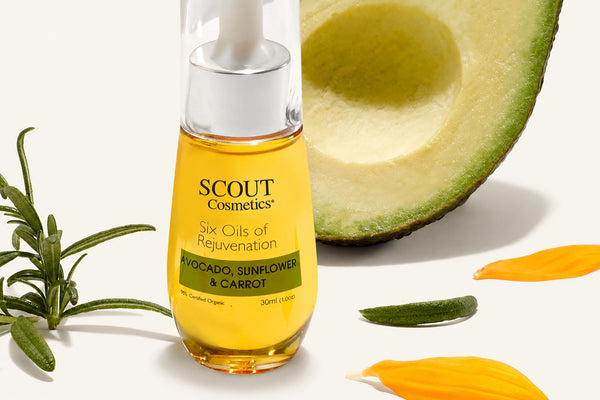
Best used morning or evening. In the morning, try adding 1–2 drops to your foundation for a dewy, protected finish. In the evening, mix into your moisturiser for an extra hydration boost. You'll find it in our Six Oils of Rejuvenation, alongside Sunflower and Carrot Seed Oil.
Rosehip Oil
Rosehip Oil has earned its reputation for good reason. Abundant in naturally occurring Vitamins A, C, and E, plus essential fatty acids Omega 3, 6, and 9, it repairs and regenerates damaged, dehydrated skin, minimises the appearance of scarring and pigmentation, and helps prevent fine lines and wrinkles.
From a barrier perspective, the essential fatty acids in Rosehip Oil are particularly important they directly replenish the lipids that hold the skin's barrier together, which are depleted by cold weather and harsh cleansing. If your skin tends to get red, flaky or tight in winter, this is the ingredient to prioritise.
Best used in the evening. Rosehip is most effective when applied at night, when the skin's cell renewal cycle is at its peak. You'll find it in our Six Oils of Rejuvenation, Vitamin C Brightening Serum, and our Balance & Replenish Light Moisturiser.
Hyaluronic Acid
Hyaluronic Acid is the gold standard of skin hydration. Found naturally in the skin's structure, it holds up to 1000 times its weight in water drawing moisture into the skin and keeping it there. In winter, when humidity drops and the air pulls moisture from the skin's surface, Hyaluronic Acid works as a first line of defence.
One important note on layering: Hyaluronic Acid works best when applied to slightly damp skin, before your moisturiser. If applied to completely dry skin in a dry environment, it can actually draw moisture out from the deeper layers instead of the air so always apply after cleansing while the skin still has some moisture on it, then seal with your moisturiser immediately.
Best used morning and evening. You'll find Hyaluronic Acid in our Cell Renewal Peptide Serum, Nourish & Hydrate Moisture Defence Crème, and Balance & Replenish Light Moisturiser.
How to Layer These Ingredients Correctly
Using the right ingredients is only half the equation the order you apply them in determines how well they actually work. The general rule is to move from lightest to heaviest consistency, allowing each product to absorb before applying the next.
A well-ordered winter routine looks like this: Cleanser → Toner (if using) → Serum (Hyaluronic Acid, Vitamin C) → Facial Oil (Rosehip, Avocado) → Moisturiser → SPF (morning only).
Wait 60 seconds between each step. This isn't just patience it allows each product to absorb properly and prevents dilution. Applying moisturiser directly over a wet serum reduces the effectiveness of both.
Ingredient Combinations That Work Best Together
These four ingredients don't just work individually certain pairings amplify each other's effectiveness and are worth building your routine around.
Hyaluronic Acid + Avocado Oil. This is arguably the most effective winter pairing. Hyaluronic Acid draws water into the skin; Avocado Oil, applied immediately after, seals that moisture in with its oleic acid content. Together they provide both deep hydration and lasting protection ideal for anyone experiencing significant winter dryness or barrier disruption.
Rosehip Oil + Vitamin C (Aloe Vera Serum). Vitamin C and Rosehip are natural partners. Rosehip already contains naturally occurring Vitamin C, and pairing it with our Vitamin C Brightening Serum creates a compounding brightening and antioxidant effect. This combination is particularly good for tackling winter dullness and pigmentation apply the serum first, allow it to absorb, then layer the oil on top.
Aloe Vera + Hyaluronic Acid. For sensitive or reactive winter skin, this is the gentlest and most effective calming combination. Both ingredients are anti-inflammatory and hydrating, without any heaviness. Use them together in the morning when your skin needs calming before facing the day the Aloe Vera soothes while the Hyaluronic Acid holds moisture in place.
A Seasonal Skincare Calendar: Adapting Through Autumn and Winter
Your skin's needs don't stay constant across the cooler months they shift as temperatures drop further and your skin responds to the seasonal change. Thinking in phases rather than one fixed routine gives you more control.
Autumn (March–May): This is the transition phase. Humidity is dropping but temperatures are still mild. Introduce a richer moisturiser and add your Hyaluronic Acid serum if you haven't already. Keep your cleanser gentle but you may not need to switch to a cream cleanser yet. This is also a good time to start using facial oils two to three evenings a week so your skin adapts gradually.
Early winter (June–July): This is when the barrier typically comes under the most pressure outdoor cold, indoor heating, and reduced humidity all converge. Prioritise barrier-repairing ingredients: Rosehip and Avocado Oil nightly, Hyaluronic Acid morning and evening, and a cream cleanser to avoid stripping. If your skin is reactive, simplify your routine and hold off on any active ingredients (AHAs, retinoids) until the barrier has recovered.
Late winter (August): As temperatures begin to ease slightly and days lengthen, you can start reintroducing brightening actives like Vitamin C. Rosehip Oil remains valuable as it continues to address pigmentation and uneven tone that may have accumulated over winter. Begin transitioning back toward lighter textures in preparation for spring but keep your barrier support in place until the weather fully turns.
Peri-Menopause and Winter Skin: What's Different
If you're in your 40s or early 50s and noticing that your winter skin feels significantly worse than it did a few years ago, peri-menopause is likely a contributing factor and it's worth understanding why, so you can respond to it with the right ingredients.
During peri-menopause, fluctuating and declining oestrogen levels have a direct impact on the skin. Oestrogen plays a central role in collagen production, skin thickness, and the skin's ability to retain moisture. As levels drop, the skin produces less of its own hyaluronic acid, collagen synthesis slows, and the moisture barrier becomes less robust. The result is skin that feels thinner, drier and more reactive than before and in winter, when the barrier is already under environmental pressure, these changes are amplified significantly.
The four ingredients in this post are particularly well suited to peri-menopausal skin in winter, because they address exactly these changes:
Hyaluronic Acid directly supplements what the skin is producing less of naturally. As endogenous hyaluronic acid levels decline with age and hormonal change, topical application becomes increasingly important not just for comfort, but for genuine barrier function.
Rosehip Oil, with its high concentration of Vitamins A, C and E and essential fatty acids, supports collagen production and accelerates cell turnover both of which slow during peri-menopause. Used consistently overnight, it's one of the most effective natural tools for maintaining skin density and resilience through this transition.
Avocado Oil's oleic acid content supports ceramide production, helping to shore up a barrier that becomes structurally weaker as oestrogen declines. For peri-menopausal skin, using a ceramide-supporting oil nightly isn't optional it's the foundation everything else builds on.
Aloe Vera addresses the increased sensitivity and reactivity that many women experience during peri-menopause. Skin that previously tolerated strong actives can become reactive seemingly overnight Aloe Vera provides a calming, anti-inflammatory layer that makes the rest of the routine more effective and better tolerated.
One additional consideration for peri-menopausal skin in winter: hormonal fluctuations can cause unexpected breakouts alongside dryness a combination that feels contradictory but is very common. Resist the urge to treat breakouts with drying or stripping products, as this will compromise the barrier further. Instead, focus on barrier repair first and address blemishes with targeted, gentle spot treatments.
Frequently Asked Questions
What causes dry and dehydrated skin in winter?
Winter dryness is caused by a combination of cold outdoor air, low humidity, and indoor heating all of which strip moisture from the skin's surface and disrupt the barrier. When the moisture barrier is damaged, skin loses water more rapidly (a process called transepidermal water loss), leading to tightness, flakiness and sensitivity.
What's the difference between dry skin and dehydrated skin?
Dry skin is a skin type it lacks oil-producing sebaceous glands and tends to feel rough or tight year-round. Dehydrated skin is a condition it lacks water, and can affect any skin type, including oily skin. In winter, most people experience dehydration rather than true dryness, even if it feels similar.
Should I apply facial oil before or after moisturiser?
Facial oil should generally be applied before moisturiser. Oils help seal in the active ingredients from your serum, and a good moisturiser applied on top locks everything in. The exception is if you're using a very light, water-based oil in that case, applying it over moisturiser can work well too.
Is SCOUT Organic Active Beauty certified organic?
Yes. SCOUT Organic Active Beauty is COSMOS-certified organic, which is the international standard for organic and natural cosmetics. This means our formulations are independently verified to meet strict standards for ingredient sourcing, manufacturing, and environmental impact.
Can I use Hyaluronic Acid and facial oil together?
Absolutely they work well in combination. Apply your Hyaluronic Acid serum first to damp skin, allow it to absorb, then layer your facial oil on top. The oil creates a sealing layer that prevents the moisture drawn in by the Hyaluronic Acid from evaporating.
Why does my skin feel so much worse in winter since entering peri-menopause?
Declining oestrogen during peri-menopause reduces the skin's natural hyaluronic acid production, slows collagen synthesis, and weakens the moisture barrier. Combined with winter's environmental pressures cold air, low humidity, indoor heating the effect is amplified significantly. Prioritising barrier-repairing ingredients like Rosehip Oil, Avocado Oil and Hyaluronic Acid, used consistently, is the most effective response.
- Sylvie Hutchings, Founder, SCOUT Organic Active Beauty