
At a dinner the other night I was hosting, one of my friends spoke to me about how much her skin changes when the seasons change. So I thought I would talk about this one as it happens to be one of the most common things I hear from customers. They email me and tell me that as soon as the temperature drops their skin suddenly feels tight, reactive, or like nothing is working the way it used to. More often than not, the culprit isn’t their products, it’s the season. Cold air, indoor heating and low humidity all work together to deplete the skin’s moisture barrier, making it harder for even good products to do their job.
The good news is that a few targeted adjustments to your routine can make a significant difference. Here are the three changes I recommend most for winter, using products from our COSMOS-certified SCOUT Organic Active Beauty range, plus a full morning and evening routine breakdown so you know exactly what to use and when.
1. Upgrade Your Cleanser

When skin feels tight and dehydrated in winter, we tend to blame the moisturiser. But the real problem often starts at the first step: the cleanser.
Many foaming or gel cleansers are formulated to remove excess oil, which is exactly what you want in summer, but counterproductive in winter when the skin’s barrier is already compromised. Using a stripping cleanser in cold weather disrupts the lipid layer that protects the skin, making everything that follows less effective.
I recommend switching to a cream-based cleanser in winter. Our Daily Revitalise Cleansing Crème contains Coconut Oil, Aloe Vera Juice, and Lemon Myrtle, which cleanse effectively while maintaining the skin’s moisture balance. The addition of Kakadu Plum and Papaya Extract provides gentle enzymatic exfoliation, improving texture and clarity without the harshness of physical scrubs, which can further compromise a weakened winter barrier. Here is the game changer, I boost the exfoliation using the Skin Therapy Glow System once a week at night with the crème cleanser. This ensures pores a clear and ready for the deep penetration of the serums, oils and moisturiser to return skin to bouncy health and vitality.
2. Add a Targeted Serum
Serums are the most efficient way to address specific skin concerns, because their small molecular size allows active ingredients to penetrate more deeply than a moisturiser can. In winter, the goal is to add concentrated hydration while supporting the barrier, and a good serum does both.

Our Cell Renewal Peptide Serum is one of my favourites for winter. It contains Niacinamide (B3), Green Tea, Ginseng and Fig, which encourage cell turnover, fight dullness and dehydration, as well as Perfection Peptide 7 and Matrixyl Sinthe’6, both of which have been clinically shown to increase collagen production and improve skin density over time. Hyaluronic Acid in the formula draws moisture into the skin and holds it there, while the peptides work to replenish the skin’s lipid layer, directly supporting barrier recovery.
3. Switch to a Richer Moisturiser
In winter, the skin’s ability to retain moisture is reduced, which means your regular moisturiser may simply not be providing enough of a barrier to prevent water from evaporating throughout the day.
A richer, creamier formulation creates a more effective seal over the skin’s surface, slowing trans epidermal water loss and keeping the complexion plump and comfortable. Our Nourish & Hydrate Moisture Defence Crème is formulated specifically for this, it combines White Tea and Pomegranate (antioxidant-rich and anti-inflammatory) with Coconut Oil, Macadamia, and Shea Butter, which are deeply nourishing emollients that support barrier repair while providing lasting hydration. This formulation is non clogging and relies on the hard working carefully selected ingredients to deliver the magic.

Pomegranate Extract in particular is worth highlighting. Rich in Vitamins A, B, C and K, it has astringent, antibacterial, and anti-inflammatory properties that help protect against free radical damage, particularly relevant in winter when skin is more vulnerable.
Your Complete Winter Routine: Morning and Evening
Knowing what to use is one thing, knowing exactly when and in what order gives you the full picture. Here is a step-by-step SCOUT winter routine for both morning and evening.
Morning Routine
Step 1, Cleanse: Daily Revitalise Cleansing Crème. Use with lukewarm water, avoid hot water, which strips the barrier. Massage in gently and rinse. Pat dry, leaving skin slightly damp.
Step 2, Serum: Vitamin C Brightening Serum. Apply to still-damp skin. The Aloe Vera Juice and Rosehip Oil in this serum calm and hydrate, while Vitamin C in the form of Kakadu Plum brightens and protects against free radical damage from cold-weather exposure. Wait 60 seconds.
Step 3, Peptide Serum (optional, alternate days): Cell Renewal Peptide Serum. If using both serums, apply the Vitamin C first (thinner consistency), then the Peptide Serum. Wait 60 seconds between each.
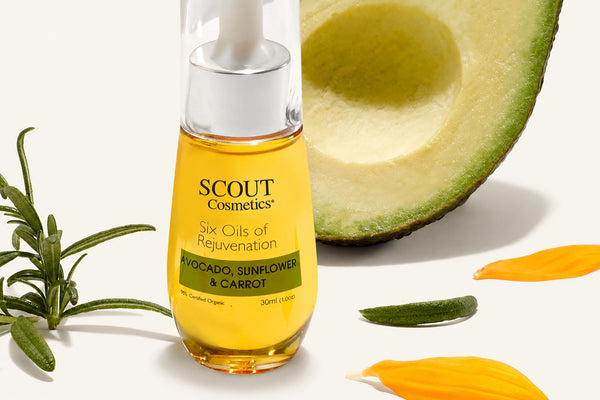
Step 4, Facial Oil (2–3 drops): Six Oils of Rejuvenation. Press into skin rather than rubbing. Alternatively, (after moisturising - mix 1 drop directly into your foundation for a dewy finish). Wait 60 seconds.
Step 5, Moisturiser: Balance & Replenish Light Moisturiser (normal/combination skin) or Nourish & Hydrate Moisture Defence Crème (normal/dry skin). Apply and allow to absorb fully before makeup, at least 5 minutes. Yes, I recommend applying the moisturiser OVER the oil in case you are wondering. You can of course do it your way but give it a try, you might be convinced to swap.
Step 6, SPF: Apply a broad-spectrum SPF over your moisturiser. UV exposure continues in Australian winters, this step should not be skipped.
Evening Routine
Step 1, Cleanse: Daily Revitalise Cleansing Crème. In the evening, take a little more time with this step, double cleanse if you’ve worn a full face of makeup, using a gentle oil cleanser first to dissolve makeup, then the Cleansing Crème for a thorough clean. This is when I recommend using the Skin Therapy Glow System as the deep exfoliation step, once a week. Use the silicon bristles with the crème and have it on Vibration mode. Then use it with the serum and oil below (in heating and vibration mode) to help infuse the serum and oil.
Step 2, Serum: Cell Renewal Peptide Serum. Evening is the ideal time for peptide serums, the skin’s repair and renewal cycle peaks overnight, and the peptides support collagen production, cell renewal and barrier restoration during this window. Apply to damp skin and wait 60 seconds.
Step 3, Exfoliate (once or twice weekly only): Super Fruit Exfoliating Wash-Off Cleanser. Use in place of your regular cleanser on exfoliation evenings. The enzymatic exfoliation removes dead skin cells without compromising the barrier, do not use more than twice a week in winter. The Skin Therapy Glow System can be used with this cleanser as well.
Step 4, Facial Oil (2–3 drops): Six Oils of Rejuvenation. Evening is when the Rosehip and Carrot Seed and carefully curated oils in this blend work hardest, supporting cell renewal, repair and regeneration overnight.
Step 5, Moisturiser: Nourish & Hydrate Moisture Defence Crème. Use generously in the evening, your skin has all night to absorb it. The Shea Butter and Macadamia in this formula are particularly effective overnight emollients.
Peri-Menopause and Winter Skin: Building a Routine That Works
If you’re in your 40s or early 50s and finding that your winter skin is significantly harder to manage than it was a few years ago, peri-menopause is very likely contributing, and it changes what a good routine looks like.
During peri-menopause, declining oestrogen levels reduce the skin’s natural collagen production, thin the skin's overall structure, and impair the moisture barrier. The skin produces less of its own hyaluronic acid and ceramides, exactly the molecules that keep it plump, hydrated and protected. In winter, when the environment is already depleting these reserves, the combined effect can feel dramatic: sudden dryness, unexpected sensitivity, fine lines that seem to have appeared overnight, and occasional breakouts alongside tight, dehydrated skin.
The routine above is a strong foundation for peri-menopausal skin in winter, but there are a few adjustments worth making:
Prioritise the Cell Renewal Peptide Serum every evening without exception. The peptides in this formula, Niacinamide, Perfection Peptide 7 and Matrixyl Sinthe’6, directly stimulate Cell turnover and collagen production, which is declining hormonally. This is the most important single habit for maintaining skin density and resilience through this transition.
Don’t skip the facial oil. As ceramide and lipid production declines with oestrogen loss, the barrier becomes structurally weaker. Facial oils rich in oleic and linoleic fatty acids, like our Six Oils of Rejuvenation, directly replenish what the skin is producing less of. For peri-menopausal skin, this step moves from optional to essential in winter.
Be cautious with actives. Peri-menopausal skin often becomes more reactive, even to products it previously tolerated well. If you experience stinging, flushing or increased sensitivity, simplify your routine to cleanser, oil and moisturiser for two weeks to allow the barrier to recover before reintroducing serums.
Address the dryness-breakout paradox gently. Hormonal fluctuations during peri-menopause can trigger breakouts alongside significant dryness, a frustrating combination. Resist any temptation to use drying or stripping blemish treatments, which will worsen barrier damage. Focus on barrier repair and use only targeted, gentle spot care on individual blemishes.
Common Winter Skincare Mistakes to Avoid
Over-exfoliating. When skin feels rough or flaky in winter, it’s tempting to reach for exfoliants. But exfoliating too frequently strips the barrier your skin is already struggling to maintain. Scale back to once a week in winter and choose gentle enzymatic exfoliants over physical scrubs.
Skipping SPF. UV rays are present year-round in Australia, even on overcast winter days. Our fluid foundation contains natural UV filters, but for complete protection, layer a dedicated broad-spectrum SPF into your morning routine.
Using hot water to cleanse. Hot water feels comforting in winter but strips the skin’s natural oils rapidly. Stick to lukewarm water when cleansing, your barrier will thank you.
Frequently Asked Questions
Can I use the same skincare routine in winter as summer?
You can keep the same products in some cases, but most people benefit from switching to a richer moisturiser and a gentler cleanser in winter. If your skin feels tight, dull or reactive in the cooler months, those are signs your routine needs adjusting for the season.
How do I know if my skin barrier is damaged?
Signs of a compromised moisture barrier include persistent tightness, redness or stinging when applying products that didn’t previously cause irritation, flakiness that doesn’t resolve with moisturiser, and increased sensitivity. If you’re experiencing these in winter, strip your routine back to a gentle cleanser and a rich moisturiser for two weeks before reintroducing actives.
Why is my skin so much drier in winter since entering peri-menopause?
Declining oestrogen during peri-menopause reduces the skin’s natural production of hyaluronic acid, collagen and ceramides, all of which are central to moisture retention and barrier function. Combined with winter’s environmental pressures, the effect is significantly amplified. A routine built around barrier-repairing ingredients, peptides, facial oils and rich moisturisers, used consistently morning and evening, is the most effective response.
Is SCOUT Organic Active Beauty certified organic?
Yes, SCOUT is COSMOS-certified organic, the internationally recognised standard for organic and natural cosmetics. All products in the range are independently verified to meet strict criteria for ingredient sourcing, formulation and manufacturing.
How long does it take for a new winter skincare routine to show results?
Most people notice an improvement in skin comfort, reduced tightness and increased softness, within the first week of switching to a winter routine. Deeper improvements in barrier function, texture and hydration typically become visible over four to six weeks of consistent use.
- Sylvie Hutchings, Founder, SCOUT Organic Active Beauty