
Wrinkles don't suddenly appear one morning out of nowhere.
They arrive slowly. Quietly. Often long before we really notice them.
Most of us are taught to think of wrinkles as something to "fight" or "fix". But when you take a step back and understand how skin actually works, ageing starts to feel far less alarming — and far more manageable. Not in a cosmetic sense, but in a skin-health sense.
So, let's talk about what's really happening beneath the surface, and how we can support skin as it changes — especially living in Australia.
Skin ageing isn't one thing
Skin ageing is not caused by a single trigger. It's the result of many small shifts happening at once, over time.
Part of it is intrinsic ageing — the natural biological process we all go through. As the years pass, our skin simply becomes less active and produces collagen more slowly. It makes less hyaluronic acid, the molecule responsible for holding water in the skin. Natural oils decline and cell turnover eases back.
Research published in the Journal of Investigative Dermatology in 2023 showed that fibroblasts — the cells that create collagen — gradually lose efficiency with age. This is normal. It's not damage. It's biology.
Then there's extrinsic ageing, which is where lifestyle and environment come into play. And in Australia, this matters a lot.
The Australian sun changes the story
Australia has one of the highest UV indexes in the world. Even on days that don't feel particularly hot, UV radiation is still quietly affecting the skin.
UV exposure triggers enzymes that break down collagen and elastin. Over time, this weakens the skin's structural framework. Add environmental pollution, dehydration, stress, and the occasional skipped SPF, and the process accelerates.
A 2024 paper in Antioxidants highlighted how chronic oxidative stress — caused by UV and pollution — increases collagen degradation and weakens the skin barrier. This is why sun-exposed skin often shows lines earlier, even in people who otherwise take good care of themselves.
Wrinkles, in this context, are not a failure of skincare. They're the visible result of cumulative exposure.
What actually changes in the skin as wrinkles form
As intrinsic and extrinsic factors layer up, three key shifts tend to occur.
The first is a slowdown in collagen and hyaluronic acid production. Collagen gives skin strength and firmness. Hyaluronic acid gives it hydration and bounce. When both decline, skin becomes thinner, drier, and less resilient. Fine lines begin to show, especially around the eyes and mouth.
At the same time, the skin becomes more efficient at breaking these components down than it is at rebuilding them. UV exposure activates collagen-degrading enzymes, and over the years this imbalance becomes more pronounced. Clinical research published in Dermatologic Therapy over the last few years consistently shows this relationship between sun exposure and accelerated collagen loss.
The third change is one that often gets overlooked: the skin barrier weakens.
A healthy barrier keeps water in and irritants out. When it's compromised, moisture escapes more easily, dehydration increases, and skin becomes more reactive. The International Journal of Cosmetic Science noted in 2023 that barrier impairment is a key contributor to visible ageing — not just sensitivity or dryness.
When repair can't keep up with breakdown, wrinkles become more visible. Not because the skin is "failing", but because it's asking for more support.
Supporting ageing skin, rather than fighting it
At SCOUT, we don't believe in the language of "anti-ageing". Ageing is not something to battle. It's something to embrace with love and appreciation and move through with care.
Supporting ageing skin starts with hydration. Well-hydrated skin reflects light more evenly, feels more comfortable, and looks smoother almost instantly. Hydration doesn't erase wrinkles, but it softens them — and over time, it supports better skin function.
Barrier nourishment matters just as much. Oils and lipids that mimic the skin's natural composition help reduce water loss and improve resilience. Clinical studies published in Clinical, Cosmetic and Investigational Dermatology in 2023 showed that plant-derived lipids significantly improved elasticity and barrier recovery with consistent use.

Antioxidants play a quiet but important role too. They help neutralise free radicals before they trigger collagen breakdown. Australian native botanicals, including Kakadu Plum, have been shown in recent nutritional research (Nutrients, 2024) to offer exceptional antioxidant protection — one of the reasons we return to them again and again in formulation.
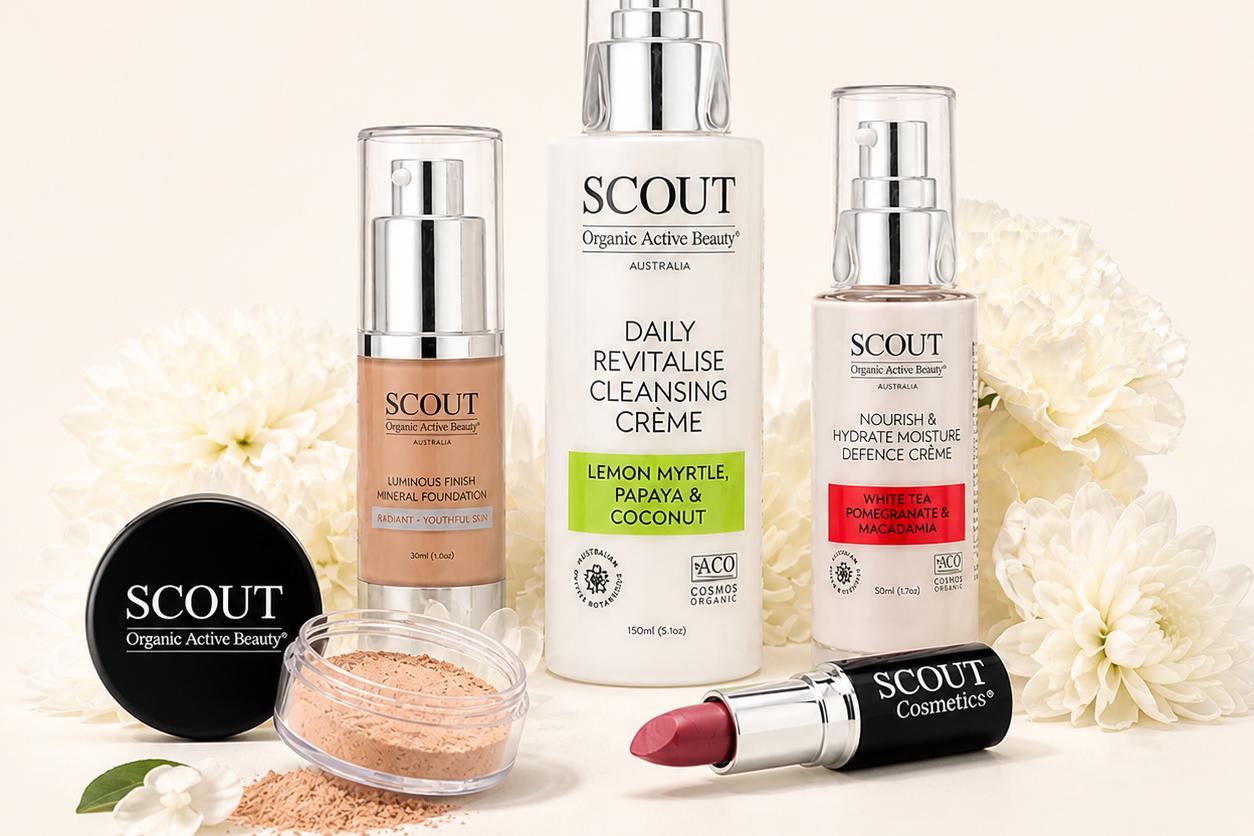
If you're curious, you can explore our hydrating skincare range as a starting point for daily barrier and moisture support.
Small rituals add up
Caring for ageing skin doesn't require aggressive treatments or complicated routines. In fact, simplicity is often more effective.
Gentle cleansing helps preserve natural oils. Applying serums to slightly damp skin improves hydration retention. Sealing moisture in with nourishing creams or oils supports the barrier. And daily sun protection is non-negotiable in the Australian climate.
These are small acts, but done consistently, they change how skin behaves over time.
Skin tells a story
Wrinkles reflect years of movement, expression, sunlight, laughter, and living. They're not something to erase.
Caring for ageing skin is about maintaining comfort, resilience, and glow as the skin changes — supporting it so it continues to function beautifully at every stage.
Thoughtful formulation. Organic botanicals. Cosmetic science working quietly in the background.